London based Paperback are environmentally friendly paper merchants who have been selling recycled paper since 1983.
We supported them through the 90’s to expand their stock selection. Today, they are still going, still specialising in supplying recycled papers wholesale, and they were the first paper merchant in the country to be awarded the FSC® Chain of Custody Certification.
In the 50 years that we’ve been lending, we’ve seen changes in the sorts of things people and organisations borrow for.
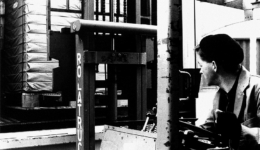
In the early days, we supported industrial work like this gloveless welder in Wolverhampton. As technology and computing developed – even before smart phones changed everything for many of us – our lending kept pace, and supported developing industries.
We lent to Southampton based graphic design cooperative Total Coverage a number of times from 1989 to 1996, supporting them to start up and expand. Sadly they are no longer trading today – but their premises was very close to our friends and borrowers October Books.
“I first got involved with ICOF when I was a coop development worker. My first loan application went in back in 1990 when I was with Avon Cooperative Development Agency (CDA). Later, through time with Bolton NEDA, and then Lancashire CDA, I stayed connected and involved.
Ian Taylor asked if I’d come onto the Board 2002/3 and I stayed until 2021. I stayed a bit longer than I intended to as every 10 years, we had to do a share issue for the PLC. In 2017 I realised as we were coming up to do the 2022 share issue and that there wasn’t much continuity in terms of people. There were only a couple of Trustees left from the previous share issue, and only one staff member, and share issues are an area I specialise in – so I stayed to help.
Because I was on the board for so long, it was interesting to see how things changed. I can remember a strategy meeting at Wortley Hall in Barnsley, where a key part of our discussion was that we weren’t lending enough – we had shed loads of money in the bank and as interest rates were high then, we were making loads of interest. Fast forward to the 2010s and then the conversation was ‘we’ve got all this money in the bank and it’s earning almost £0′ as interest rates were so low!
Perspectives also changed over the years. Initially ICOF set up to support worker coops and that was the brief. Later, we expanded to include democratic owned business of all types – and of course a key lending group now for CCF is community owned pubs. I was instrumental in that, in over 40 loans and in developing the More Than A Pub programme with Plunkett, including lending as part of the package. I rang up Ian Rothwell, and said this could be a very interesting partnership – and it was! CCF came on and handled the loans in the south and Key Fund handled the loans in the north. What came up as a conversation planning the programme ended up being a major part of the business. I love community pubs and I’m Chair of my own local community pub – the Dog Inn at Belthorne, 4 miles south of Blackburn. We had a fantastic bank holiday weekend recently with over 68 dogs at our dog show, up from 20 last time!
There’s no-one left from the ‘old days’ and that’s healthy. It changes and transitions and that’s how it should be.
Well done on reaching 50 – we told you you could manage without Ian Taylor :)”
As part of our 50th birthday year, we’re speaking to people who have worked with us in a variety of ways since 1973. Today we speak to Babs Nicgriogair who is part of Greencity Wholefoods – a worker co-operative and wholesaler of fine food and drink based in Glasgow’s vibrant east end about how our support helped not just them, but the cultural community in Glasgow.
“I joined Green City in 2000. Not long after that, the business had to relocate. It had been going since 1978, and it had had a couple of locations before arriving in the east end of Glasgow. What we moved into wasn’t a bespoke food warehouse – it was an old Pickfords removals building near Hey, so it’s like a Furniture Warehouse. There were two buildings: one was an office block, and one was the actual warehouse itself, both on the same site. Our offices inhabited the bottom floor of the office building, but the other two floors were just derelict.
There was a need for artists’ spaces in Glasgow. The art school was going from strength to strength, its reputation had grown, and the city was really experiencing a cultural revival. There were a lot of artists migrating to the city but didn’t have studio spaces.
So, we thought that actually we could become a cultural landlord, and use the two floors above our office space to house various artists. The funding from ICOF helped us make this happen and it was quite a job!
We did one floor and then we had to wait to do the second one. But now we do have a thriving cultural community at Green City that kind of exists outside our business and does its own thing, but also there is an interface with us from time to time.
We provide a fair rent for cultural tenants, and we have a very low turnover of these tenants. Some are internationally recognized contemporary artists, some are educationalists. We have a stained glass studio, a recording studio – it’s an incredible place and I’m really proud to have been part of that.
Happy birthday ICOF! or Co-là breith sona ICOF !! as they say in Gaelic”
An historic village inn frequented by two of the most famous English landscape painters and now owned by its residents receives long-term finance boost.
With an inn on its site going back all the way to 1305, The Lamarsh Lion Community Pub commands a superb view over the River Stour much loved and sketched by the renowned landscape artists Thomas Gainsborough and John Constable. On the Essex/Suffolk border about 10 miles northwest of Colchester, Lamarsh is a small village of around 180 residents who since 2017 have owned their community pub after it was put up for sale the year before.
Along with a successful community share issue, a grant from the ‘More Than a Pub’ legacy scheme, a loan from Co-operative & Community Finance, and a private loan; the community were able to proceed with the purchase of the pub and begin refurbishments from July 2017. Since then, repairs and renewals to guttering, roof tiling, chimney stacks, windows and doors as well as refitting and reequipping the trade kitchen, timber frame, damp issues and drainage have all been undertaken and completed.
Co-operative & Community Finance along with Co-op Loan Fund (managed by CCF) were pleased to help secure additional finance for the pub as it continues to develop and grow as a vital community asset. Kevin Lloyd-Evans, Lending and Relationship Manager at Co-operative & Community Finance said: “We are delighted to be able to support for The Lamarsh Lion. Our long-term finance was able to support the needs of the group. This type of finance was not available through other lenders. Rising energy prices have a created tough trading conditions, however with impressive leadership in place and a debt structure which supports the business, the outlook has significantly improved for the group.”
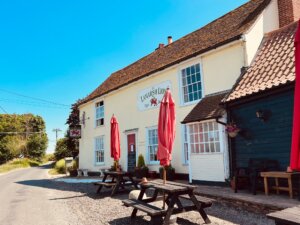
The Lamarsh Lion Community Pub in Lamarsh, Essex.
With a committee that offers a broad range of skills and experience, The Lamarsh Lion has built up a reputation as a place to eat and drink for families in the local area and has been doing well with theme nights and community focused activities. With residents also utilising the pub regularly for family parties, The Lamarsh Lion are truly establishing themselves as a family friendly affordable venue in the region.
Ruth Allison, Treasurer at The Lamarsh Lion Community Pub Ltd said: “Getting this further investment from Co-operative & Community Finance and Co-op Loan Fund has really been a boost to our group. The challenges of running a community business in the current economic environment are complex and persistent. Having a supportive lender who knows what you are going through, understands and is willing to help is much needed and appreciated. It is a refreshing approach to accessing community finance.”
The legacy ‘More Than a Pub Fund’ scheme provides loan finance of between £75,000 to £150,000 available to Community Owned Pubs at a discounted rate of interest for members of the Plunkett Foundation, length of term ranges from five to twenty years. Co-operative & Community Finance also helps support groups to access grant funding to help them develop business plans and pay for surveys through the Reach Fund. Please contact Co-operative & Community Finance for the full terms and conditions, and to discuss how your Community Owned Pub venture can be supported.
You can find out more about The Lamarsh Lion by visiting their website.
A printing cooperative rooted in activism within London’s East End has secured finance as a returning borrower, 44 years after being the first co-op to fully repay its loan to Co-operative & Community Finance, back in 1979.
Founded in 1977, Calverts is a design and printing workers’ cooperative based in Bethnal Green, East London. As a 13-strong equal pay co-op, the business is built on a collective foundation where employees “jointly own and control the company, putting into action the cooperative values of equity, solidarity, democracy, self-help, self-responsibility and equality”.
Calverts members Cherry Haynes and Sam Rogers check quality on a print project.
Calverts offers a range of services including creative design, branding, high end print and bookmaking, as well as creative workshops, teach-ins and team building days for clients. Over its 45-year trading history Calverts has served a wide client base that includes consumer brands, universities, the arts, third sector and campaigning organisations. Famously, Calverts researched and designed the global Co-op Marque.
Working with Co-operative & Community Finance, Calverts has secured a loan to purchase new reprographic equipment. The loan comes some 44 years after Calverts were the first cooperative to fully repay a loan to Co-operative & Community Finance (ICOF as it was then known).
Kevin Lloyd-Evans, Lending and Relationship Manager at Co-operative & Community Finance said: “As a returning customer, we are delighted that Calverts have chosen to work with Co-operative & Community Finance again. Since 1977 Calverts have been part of the worker cooperative movement. In our 50th year it is rewarding to see our relationships with clients standing firm and the continued relevance of our funding across the cooperative movement.”
A recent article described Calverts as a cooperative that has been ‘putting the activism into Bethnal Green since its 70’s punk rock beginnings.’ And with their radical roots running deep in the East End, the article goes on to say the co-op are ‘best placed to serve the community of which they are an intrinsic part, and in an environmentally efficient way.’
Co-operative Director Siôn Whellens said “The new £50k loan on CCF’s unique terms represents good value for money, and helps ensure Calverts competitiveness in a tech-driven industry. Because they’re a lender with a mission to support worker co-ops, we were delighted to renew the partnership with CCF”.
You can keep up to date with Calverts by visiting their website.
Today in our series of conversations with people who’ve been part of ICOF over the last fifty years, we speak to Andrew Hibbert.
Andrew was involved with ICFO from the mid 1990s to 2008, first as a Board member and then from 1998, in employment as our Loans Officer. Andrew then became our Development Manager, a role he held until 2008. Andrew crossed over with our current Operations and FCA Compliance Manager Alain Demontoux, and passed on the Development baton to Ian Rothwell. Here Andrew looks back on those years, and the connections made.
“It was an interesting time really, we never really had a development person before but when New Labour came into office, they came up with an awful lot of development initiatives which we felt we needed to be part of. I was particularly keen to move us closer to the rest of the broader Co-op movement. We were just supporting worker coops at the start, but our sister organisation ICOM, the Industrial Common Ownership Movement, merged with the Co-operative Union, which became Co-operatives UK, and that left me feeling we were a bit exposed. I steered us towards them, and the Co-op Bank and the Co-operative Group to try and work with them because they were taking on board the broader co-op picture. In some ways, all I did was put myself about and talk to different people. I introduced myself to the organisations above, to Plunkett, Big Issue Invest and other organisations in the space and just opened conversations with them. It felt like the time was right to work together.
Through those conversations, I helped set up the Co-operative Loan Fund, which was pretty successful. And then I worked with the Plunkett Foundation to set up the loans for village shops, which also went on to be the loans for village pubs. The idea was that Plunkett would with deal the grant side of it, and we do the loans and financial appraisal, subject to the actual villagers raising some finance themselves from equity finance. And I’m really quite proud of that really. Those two programmes were quite successful things and they were very much with the broader co-op movement, and they made us a bit stronger. They enabled us to earn a living, because it’s actually very difficult to earn a living just from lending – that’s why the banks don’t do a lot of lending at risk. And then this meant that we had proper separate income streams. We were able to use our strength at managing loans by offering additional services, doing the back office work and managing other people’s funds.
I remember one loan quite vividly. It was in the village of Titchmarsh in Northamptonshire, and inevitably, they invited Alan Titchmarsh to do the opening. He said yes, and came and he was truly excellent. He gave it the full three hours and was really warm and supportive.
I’d like to say a very happy 50th to ICOF, particularly remembering my friend Roger Sawtell. It was through Roger that I got into the co-operative space in the first place. Roger knew the 50th was coming, he would have been delighted to see ICOF reach it and he would have joined the celebrations if he could. Sadly, Roger died late last year so I want to pass on my congratulations on his behalf too.”
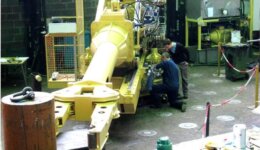
Employee owned Clansman Dynamics began in Scotland in 1994 and represents perhaps some of the ‘heaviest’ industry that we’ve supported, coupled with innovative robotics.
We lent to them in 2009 to support their employee buyout, and, going strong today, they design manipulators and robots to handle workload in the extreme environments of foundries and forges.
Fascinated by the idea of robots handling molten metal? Find out more here
Get the help you need with Business Support for Co-ops
If you’re curious about setting up a new business as a co-op, are keen to grow your existing cooperative, or looking to convert to one, Business Support for Co-ops is designed for you.
Brought to you by Co-operatives UK and The Co-operative Bank, working in partnership to support fair, ethical enterprise, the programme helps build better co-operative businesses by offering up to six days expert support to:
Start-up businesses that want to be co-ops.
Existing co-ops that want to grow or adapt their services or meet challenges.
Businesses that want to convert to the co-op model.
From bespoke guidance and mentoring in HR, marketing, finance, governance and more, to digital tools and events – the programme offers a wide range of easy-to-access services to help co-op businesses start, grow and succeed. Support is tailored to the business’s specific needs and schedule – and can include peer mentoring from an established co-op.
Any kind of business can be a co-op. There are co-op bakeries, breweries, energy suppliers, bookstores, community gardens, farmers, sports clubs, acting agencies – and much more. But they all have one key thing in common: they are owned and controlled by their members, who have a say in how the business is run and a share in its success.
Co-ops are worth around £40 billion to the UK economy each year and are also resilient in challenging economic conditions. They were five times less likely to stop trading in 2021, compared to businesses generally. The evidence of their contribution to a stronger, fairer, and more ethical economy is compelling.