Here at Co-operative and Community Finance, we are the lender for social purpose. We exist to help people take control of their economic lives and create social benefit.
We exclusively serve the co-operative and social enterprise sector, and for almost fifty years we have supported hundreds of businesses ranging from small community‑run enterprises to large award‑winning organisations.
Through the provision of accessible finance we have helped to create and preserve thousands of jobs within the social economy and supported the set up of many new and innovative co-operatives, employee buyouts, and community enterprises.
Since our inception, we have lent over £15m, and through our management of standalone funds, including the Co-op Loan Fund, we have lent over £25m to hundreds of employee-owned businesses, worker co-ops and community businesses of all shapes, sizes, and sectors.
Millions of people are members of a co-op. They, like us, are being the change they want to see in the world – building a better future. Do you want to, too? Join us.
Thank you to everyone who took part in our Annual Survey! We’re delighted to say that the results are in and they make for enjoyable reading after what’s been a difficult year all round.
This year we sent out our survey with sister company the Co-op Loan Fund and received our highest ever number of responses. From these, 73% of respondents rated their overall experience of Co-operative and Community Finance as ‘Very Good’ and 23% selected ‘Good’ giving us an impressive TripAdvisor style score of 4.7 out of 5.
And nearly 70% were confident in saying they would be Very Likely or Likely to use our services again in future.
But numbers are one thing; we are always thrilled to read personal comments and these are delightful.
‘As far as I am concerned your service is as good as it can get.’
‘I can’t offer any suggestions to improve it.’
‘Been very helpful and stayed in touch during Covid-19 crisis.’
‘You do an amazing job with the small, dedicated team who are so dedicated to co-op development and support.’
It’s a genuine pleasure to work with organisations building a better future. Thanks to all who responded and who work with us today, have done before, and will do in future. And happy reading to the lucky – anonymous – respondent who was the winner of our Co-operative Bookstore voucher!
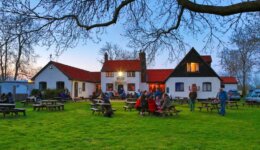
Residents of the Waveney Valley on the borders of Norfolk and Suffolk rallied together at impressive speed despite the restrictions of a global pandemic to purchase and renovate iconic riverside pub The Locks Inn.
The community benefit society that now owns the popular ex-mill and lock keeper’s cottage turned public house at Geldeston raised over £600,000 from an incredible 1,400 shareholders in just three months.
As well as through word of mouth in the local community, the campaign garnered enthusiastic support on social media with the pub’s first Facebook post being shared over 1,600 times, reaching over 100,000 people and gathering 355 comments of support leading to shareholders and donations coming from as far afield as Australia and Canada. The pub with local funding has worked with the local parish church of Beccles to purchase unwanted pews to help with additional seating keeping in line with the original furniture and keeping local.
Committee Member Christine Pinsent said: “The response from the share issue has been overwhelming and we have been inundated with volunteers due to fantastic memories local residents have of the pub.”
The group also received support from the More Than A Pub programme, which provides free advice and webinars, bursaries, grants and loans to communities seeking to buy their local, as well as those who are already trading. The programme is funded by Power to Change and is delivered by Plunkett Foundation working in partnership with Co-operative & Community Finance and the Key Fund.
Refurbishments are underway and members intend to use the More Than A Pub loan from Co-operative & Community Finance to advance two major projects in updating the sewerage system and access to the national grid. Christine Pinsent said: “The support from the More Than A Pub programme has been fantastic and has really helped us through the process.”
The first community owned pub in the Waveney Valley will be accessible to all, promoting social inclusion and involving all ages, with everyone able to have a say in the running of the pub and all the activities that are delivered.
The idyllic large outdoor space by the river makes the pub a popular stop off point for people visiting by boat while also attracting walkers, cyclists and visitors from local camping sites. The committee will also resurrect music and local traditional events making the pub fully inclusive and financially viable for the long-term future.
The Locks Inn Community Pub will open its doors to the public on 13 May after having three days beforehand to welcome shareholders to their pub.
Ian Rothwell, Investment Manager of Co-operative & Community Finance, said: “This is a lovely pub in a beautiful setting which is appreciated by local people, walkers, cyclists and boaters. With regular events such as beer festivals, story nights, musical performances and sessions the Locks Inn is a destination pub and certainly one that I will visit again once restrictions are eased.”
Have you run a Community Share Offer where your investors benefitted from Social Investment Tax Relief (SITR)? Are you planning to?
Act now to save it – or it will go by April. A decision is expected in March so time is tight.
Social Investment Tax Relief (SITR) is a tax incentive for individuals making an investment into an eligible charity or social enterprise – includes Community Benefit Societies running community share offers. Investors can claim back 30% of their investment from HMRC which of course encourages them to invest more into their community.
Co-operatives UK have set out simple steps you can take to save SITR.
Please ask your MP to contact the Chancellor of the Exchequer, Rishi Sunak, and Financial Secretary to the Treasury, Jesse Norman, to press the importance of extending SITR!
We’ve been incredibly impressed with the way so many Co-ops and Community businesses have managed through the Covid-19 situation and lockdown. The commitment to serving their communities and the resilience and ingenuity they have shown has been amazing!
We’ve spoken to a number of our clients about how they have managed – here we share the story of Retrofit Works, after speaking to Soren Nellegaard.
What was your immediate challenge?
The key bit was really that we depend a lot on going on site into people’s homes, both for the home assessment we do and the installations our contractor members do. So, we asked ourselves, how are we going to get into people’s homes? We also had a challenge with employees getting to the office. But we all have laptops and use cloud software, so we’ve been able to work relatively easily from home.
What did you do?
We made thorough risk assessments and reviewed what information and guidelines were available to make visits to homes COVID-19 safe. Government guidance at the time was pretty much non-existent so our MD, Russel Smith really dug into it. He thought really carefully and made a risk assessment and method for going into homes under various scenarios – considering how can we do it in a safe way, when is it impossible, when can it be ok, when does somebody need to be out of the house when we are there, for example.
Another thing we did was to create an online survey to start the process –the survey we need to design for a Whole House Plan requires an on-site survey but sometimes we can do quite a lot by starting with a remote survey. We offered it at a discounted price to get started and then when things got better then we could come and do the actual survey – this was an entirely new service which meant that we could build a pipeline of business.
What are you doing now?
We’re using our risk assessment and are pretty much back to normal – we’ve got our security protocols sorted out and so we’re back into homes doing surveys and helping people. A key thing we do before visiting is to send information to households before we go, which outline things the householders needs to do. There are differences depending on whether the person is shielding, the size of home, if there are multiple doors to gain access to the property, etc. Most typically, we ask people to ventilate their home properly before and after we are there, but now that winter is here it might be more difficult to get people to comply.
What are your plans moving forward?
We are very busy with delivering Green Home Grant installation in the Local Authority Delivery scheme. We have contracts in both East Sussex, Richmond and Wandsworth, which needs to be completed by the end of March. At the same time, our operations are normalising due to the precautions and risk assessments we do.
Every year, PubAid runs a competition to find the Charity Pub of the Year, sponsored by Matthew Clark and run in conjunction with the All-Party Parliamentary Beer Group.
In the face of the disruption caused by COVID this year, they have decided to change the name of the competition this year to the Community Pub Hero Awards, and they looking for pubs who went the extra mile to help others during the pandemic. Did you turn your pub into a grocery store, deliver hot meals to elderly residents, run online quizzes or music, or offer a friendly chat to isolating customers? They want to hear from you.
Entering your pub is easy and free of charge – complete the short entry form here by the 30th November.
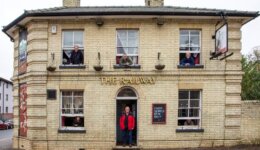
[photo: Directors of Saffron Walden Community Pub inspect their new purchase. Chair Dave Kenny in doorway.]
After a long journey with several delays the determined people of Saffron Walden in Essex now own the Railway Arms, an iconic pub that is part of the town’s industrial heritage.
It was over four years ago that local people started talking about saving the Railway Arms. It was clear that the pub company that owned it wanted to dispose of it and in January 2017 it was put up for sale. The campaigners managed to get it listed as an Asset of Community Value which put a six-month moratorium on the sale. They registered a community benefit society and held a share issue to raise investment to buy the pub. They made an offer in 2017 and a much higher one in 2018 but both were rejected. In April 2018 the owners took it off the market and started planning to redevelop the site.
After several applications for planning permission had been rejected the owners put the pub back on the market in December 2019. The community benefit society held a second share issue, partly to replace the investment that had been withdrawn when the previous attempts to buy had been unsuccessful. Eventually the owners accepted a new offer in July 2020, and on 12 October the Railway Arms finally reached community ownership.
The Chair of Saffron Walden Community Pub, Dave Kenny, is also an archaeologist. He said: “The Railway Arms is part of the industrial heritage of the town and it is also a lovely building. It is a large plot for a town pub with a garden, stables and other outbuildings that offer huge potential for community use. If we had not campaigned and eventually bought it, the site would probably have been redeveloped and all that history and community value would have been lost.”
The group received support from the More Than A Pub programme, which provides free advice and webinars, bursaries, grants and loans to communities seeking to buy their local, as well as those who are already trading. The programme is funded by Power to Change and is delivered by Plunkett Foundation working in partnership with Co-operative & Community Finance and the Key Fund.
Saffron Walden Community Pub now has 440 members who have invested a total of £227,000, which together with the grants and loans from More Than A Pub, mortgage finance from Triodos bank and £50,000 in share equity from the Community Share Booster programme, was enough to proceed with the purchase and renovation. The share offer is still open until 31 October – visit strap.org.uk for more information.
The joy in the community at ‘saving the Railway’ has been dampened by the announcement that Essex is now in Tier 2 (high) for anti-covid measures. The business plan for the Railway Arms, which included employing a manager, has been put on hold. Early preparation work is being done by volunteers and this is likely to continue for some time.
Dave Kenny said: “We did not want to rely on volunteers but we’ll need to do so over the coming weeks. It would be difficult to commit to new jobs at the moment. It’s difficult to say quite when the Railway Arms will open for business but when it does we will have the community on board, and we know people in the town will understand.”
Ian Rothwell, Investment Manager of Co-operative & Community Finance, said: “This is another example of a community saving its pub with a bit of help from the More Than A Pub programme. Being in an urban area, the Railway Arms is a bit different to many of the village communities that we have supported. The local community have demonstrated their support for the initiative by making the necessary investment, and I was impressed with the amount of voluntary effort that has got them this far. I’m confident that it will succeed in the long run despite the immediate difficulties caused by covid.”
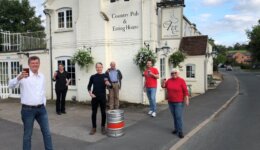
[photo: Directors of Loxley Community Benefit Society celebrate the purchase with a socially distanced drink]
The small village of Loxley near Stratford-upon-Avon is the latest to save its only pub from permanent closure.
Local residents acted quickly when the Fox was unexpectedly put up for sale in April 2019. They formed an action group, conducted a community survey and held consultation events in Loxley and neighbouring villages, to generate and gauge support for community ownership of the pub. They set up a community benefit society and made an offer to buy the Fox which was accepted in October 2019. They then set about raising the investment needed.
The group received support from the More Than A Pub programme, which provides free advice and webinars, bursaries, grants and loans to communities seeking to buy their local, as well as those who are already trading. The programme is funded by Power to Change and is delivered by Plunkett Foundation working in partnership with Co-operative & Community Finance and the Key Fund.
The community share issue exceeded its target of £250k and raised a total of £271,150 from 214 investors who were almost entirely local residents. Interestingly, another community pub in Warwickshire, the New Inn at Norton Lindsey, invested the £250 prize money it had received from the Plunkett Community Business Awards.
Together with the grant and loan from More Than A Pub, the community had the finance it needed to buy the Fox. However the purchase was greatly delayed by the coronavirus pandemic and was not completed until 1 September 2020.
Paul Jennings, Chair of Loxley Community Benefit Society, said: “The Fox is a traditional pub in a small rural village that has no shop or village hall. It is the centre of the community – the only public space for people to meet and interact. If the community had not come together and bought it, the site would probably have been sold to a housing developer.”
The villagers will have to wait till spring before they can savour the hospitality of their new purchase. Repairs and refurbishment are needed to the roof, bar area and the upstairs accommodation. A manager needs to be recruited.
The Fox has a beer garden, car park and paddock and this outside space will be particularly useful in allowing the pub to operate as safely as possible while the threat of virus infection remains high. In the longer term there are plans to create a community orchard and vegetable garden in the paddock.
Asked why he believed the Fox would flourish under community ownership when previous tenants had struggled, Paul explained: “We don’t have to pay rent and we can choose our suppliers. This helps our cost base. Also we are not under pressure to make quick or high profits. Our aim is sustainability. We are providing and maintaining a community asset for the long term.”
Tim Coomer, Business Development Manager of Co-operative & Community Finance, said: “We are really pleased to have been able to support Loxley CBS to secure the Fox. I visited the group back in February 2020 just before the COVID-19 situation unfolded and put the project’s future into jeopardy. Seven months on it’s fantastic that their determination and commitment to secure the Fox into community ownership never wavered and the community now proudly have their pub back; even if they will have to wait awhile for their first pint!”
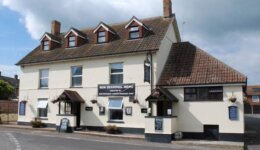
The shop and the pub in a small village in Somerset have a secure future thanks to the efforts of the residents and support from a programme to support community ownership.
Until recently Stoke St Gregory, near Taunton, had two pubs and an independent shop. In late 2017 the parish council learned that both pubs were under threat of closure and that the future of the shop was similarly uncertain. After extensive community consultation the parish council developed a long-term plan to bring the larger and more central of the two pubs into community ownership and to use it to accommodate the shop and a cafe as well as the traditional pub. They got the Royal Oak registered as a Asset of Community Value and set up a community benefit society to raise investment and buy the building.
The group received support from the More Than A Pub programme, which provides free advice and webinars, bursaries, grants and loans to communities seeking to buy their local, as well as those who are already trading. The programme is funded by Power to Change and is delivered by Plunkett Foundation working in partnership with Co-operative & Community Finance and the Key Fund.
The community share issue raised £206,000 from 254 investors who were almost entirely local residents. Together with the grant and loan from More Than A Pub, the community was able to buy the Royal Oak, and the purchase was completed on 26 August 2020.
The pub has been closed since lockdown started in March but the business of the village shop, which the society had previously purchased, has been very busy. The shop has been running from a converted shipping container located beside the village hall and moving it into larger premises within the Royal Oak is a very high priority.
Graham Gleed, chair of the Heart of the Village society, said: “The community shop has been a lifeline during the coronavirus pandemic and sales have much higher than normal. We really need more space to satisfy the needs of the community.”
After some essential renovation and repair to the building, the shop and café will open for business from the Royal Oak in September, and the pub itself is expected to reopen in October.
Tim Coomer, Business Development Manager of Co-operative & Community Finance, said: “We are delighted to be able to support HOTV, by combining the shop and the pub in one central location they are creating a true community hub that will become the beating heart of the village.”
The oldest senior football ground in London has been bought by the local supporter-owned club and is set to become a permanent asset to the community of Forest Gate in East London.
Clapton Community Football Club completed the purchase of the historic Old Spotted Dog Ground on 24 July 2020, following a long campaign by the fans to regain their home. Clapton Community FC was established in June 2018 as a fan-owned and fan-operated community club, by the life members and supporters of Clapton FC. It now has over 1,300 members worldwide.
The Old Spotted Dog has been the spiritual home of Clapton supporters for over 130 years… but for the first time ever, they now own it. The previous owners, Star Pubs & Bars, had been looking for new tenants since last summer, when it terminated the lease held by Newham Community Leisure Ltd due to non-payment of rent. Confusingly, the previous tenant continues to field a team, called Clapton FC, most recently based in Southend-on-Sea.
The ground has been very neglected in recent years and requires significant work, which will be kick-started with a loan from Co-operative & Community Finance. When the work is complete, the restored ground and clubhouse will be available for use by local schools and community groups.
Kevin Blowe, treasurer of Clapton Community FC, said: “For the first time ever, the oldest senior football ground in London is owned by a football club, and a member-run, non-profit, community-focused football club at that. Bringing Clapton’s spiritual home back into community use, after a season of boycotts of Clapton FC home games when it was placed into liquidation by the previous tenant, was absolutely central to the motivation for setting up Clapton Community FC back in the summer of 2018. Finally having a ground of our own, owned by members, will offer long term stability for the club and also the chance to build lasting links with the local community.”
The campaign to make the Old Spotted Dog a community asset once more has been backed by West Ham MP, Lyn Brown, Mayor of Newham, Roksana Fiaz and local councillors.
Kevin continued: “We also received continuous support from the Football Supporters Association, both in terms of buying the ground as well as many other aspects of creating and running a fan-owned football club. We are incredibly grateful for everything they have done for Clapton Community FC.”
The fan-owned club has succeeded because it is passionate about equality, democracy and fairness. It encourages people of all backgrounds and abilities to get involved. The club is passionately anti-fascist, anti-sexist and anti-racist. Clapton’s away kit is inspired by the colours of the International Brigades and the Spanish Republican flag, those who fought against fascism in Spain during the civil war in the 1930s. It features the slogan ‘no pasáran’ (they shall not pass) which was used by Republican troops at the time. Photos of the kit went viral following one of their first ever games and the club sold 11,500 away shirts, including 5,500 to Spain, in its first season, instead of the 250 they were expecting.
Ian Rothwell, Investment Manager of Co-operative & Community Finance, said: “This is a fan-owned club where the politics of the club are nearly as important as the football. It has built an extremely engaged and committed membership. This is a real grassroots football club and we are delighted to be supporting it. Members include people from all sorts of different backgrounds and with that come many skills which can be utilised voluntarily. They are itching to start work on improving and developing the ground as a community asset.”




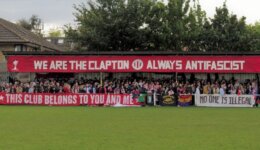
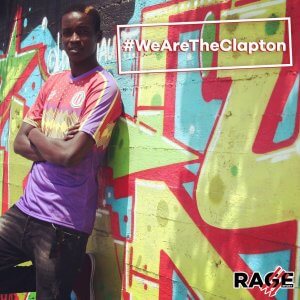 The fan-owned club has succeeded because it is passionate about equality, democracy and fairness. It encourages people of all backgrounds and abilities to get involved. The club is passionately anti-fascist, anti-sexist and anti-racist.